A new Morning Consult poll of 1,003 parents with children in public schools finds broad support for keeping flavored milk and flavored yogurt available as part of school meal programs.
Parents routinely serve flavored dairy products at home, believe their children are more likely to consume a full serving when milk and yogurt are flavored, and recognize the important nutrition these products provide. More than three-quarters of parents support offering flavored milk and flavored yogurt in school meals, and nearly three-quarters would be concerned if those options were removed.
The survey also found strong support for providing students with a wider range of nutritious dairy choices, including whole and 2% milk.
Methodology
This poll was conducted between March 5-8, 2026, among a sample of 1,003 Parents with children in public schools. The interviews were conducted online, and the data were weighted to approximate a target sample of Parents with children in public schools based on gender, age, race, educational attainment, region, and gender by age. Results from the full survey have a margin of error of plus or minus 3 percentage points.
Key findings are below. IDFA members can access topline and crosstab results at the bottom of this page.
Key Findings
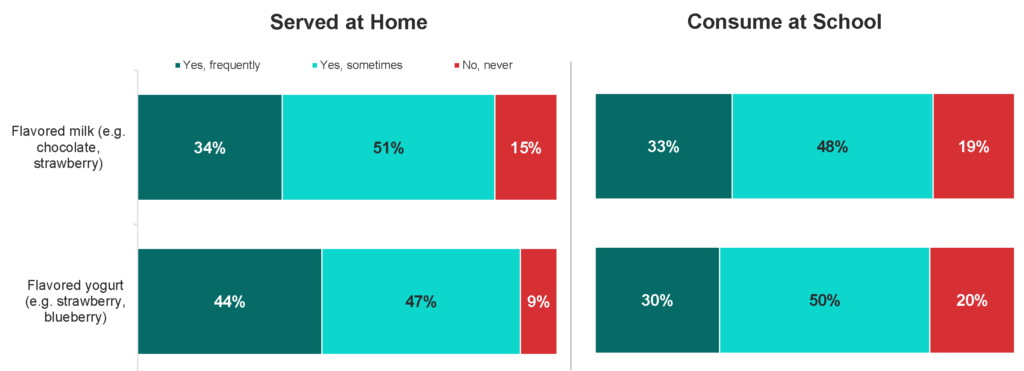
Parents frequently serve flavored milk (85%) and flavored yogurt (91%) at home, and most believe their child consumes these products at school.
Do you currently serve the following to your children at home? | As far as you know, does your child consume the following at school?
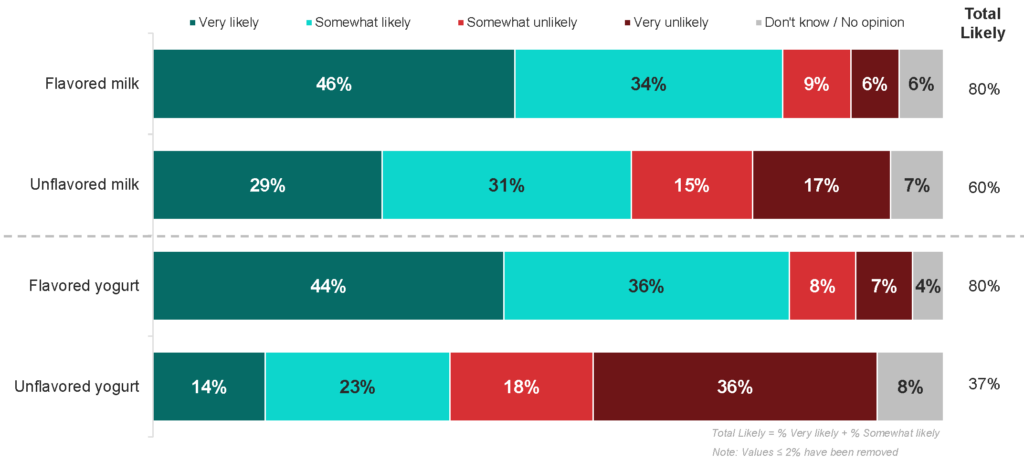
Parents say their children are more likely to eat or drink a full serving of flavored milk or yogurt than they are their unflavored counterparts. One-third of parents say their child is very unlikely to consume unflavored yogurt.
Regardless of where they are, how likely is your child to eat a full serving of the following?
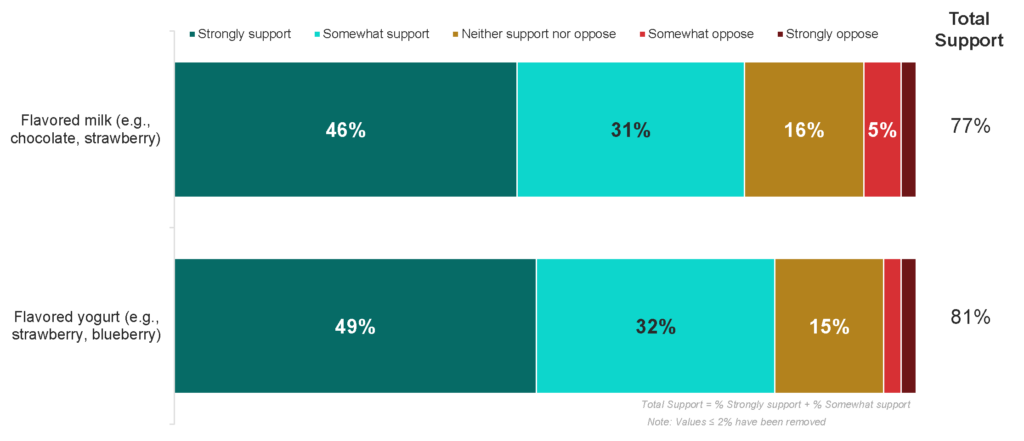
Parents support flavored dairy options in schools. About half strongly support flavored milk and flavored yogurt being offered as part of school meal programs.
Based on what you know, do you support or oppose the following being available as part of school meal programs?
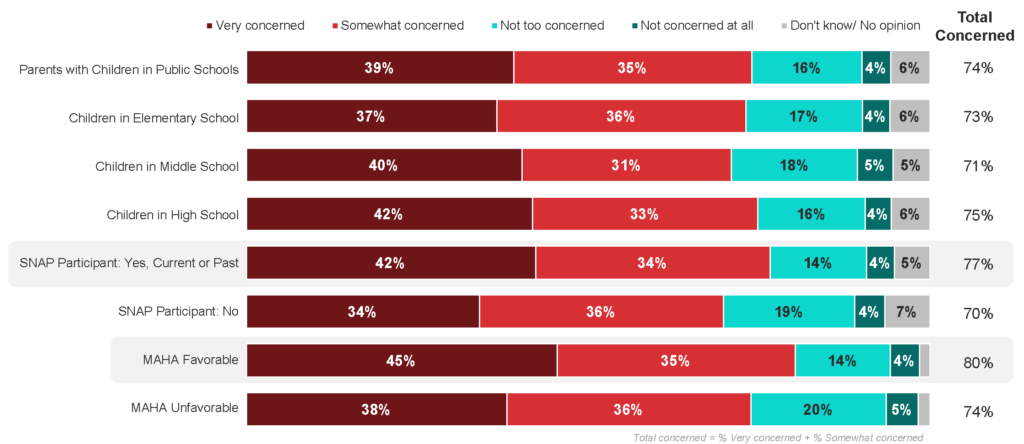
Parents would be concerned if flavored dairy options were removed from their children’s meal program. This concern is particularly strong among parents with favorable opinions of MAHA and SNAP participants.
After learning more, if flavored milk and yogurt were removed from your child’s meal program, how concerned would you be?
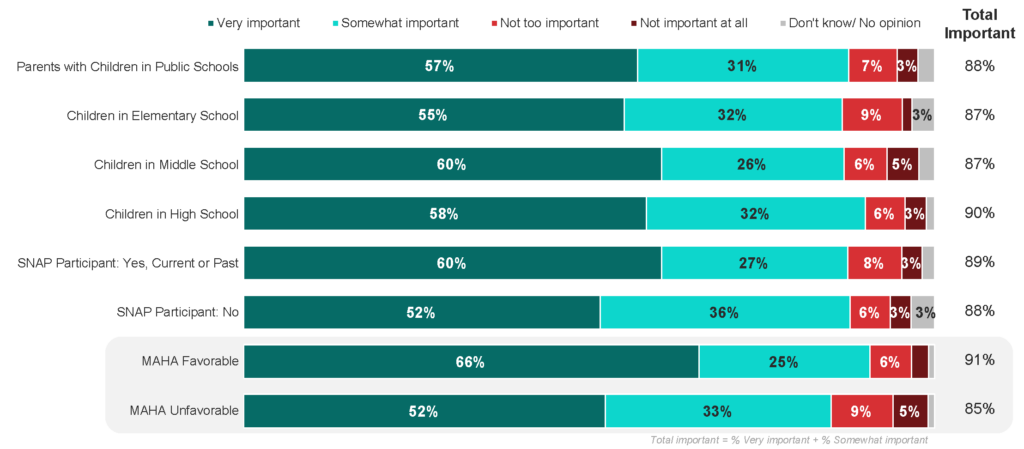
Milk's nutritional importance for kids is near-universal among parents. Parents with favorable opinions of MAHA feel particularly strongly about this, with two-thirds saying milk is very important for children’s nutritional intake.
How important, if at all, do you believe drinking milk is for children’s daily nutritional intake?
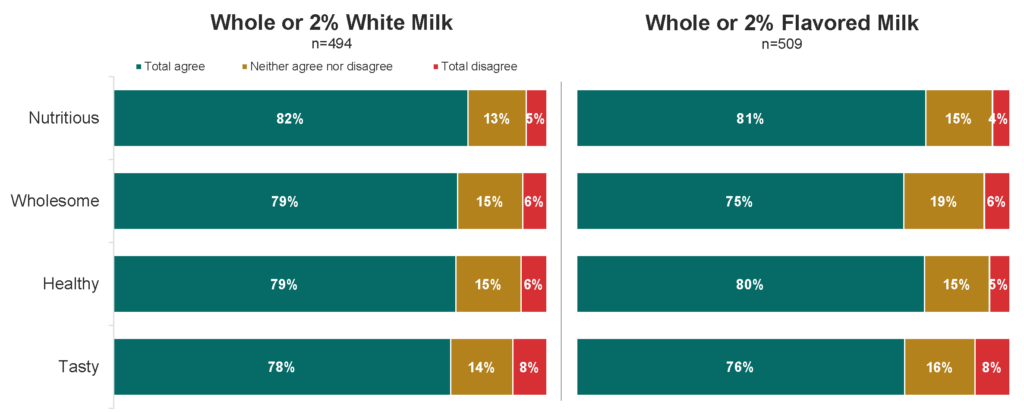
The vast majority of parents consider whole or 2% milk – flavored or unflavored – nutritious, wholesome, healthy, and tasty.
Do you agree or disagree that each of the following words you believe describe whole and 2% white/ flavored milk?
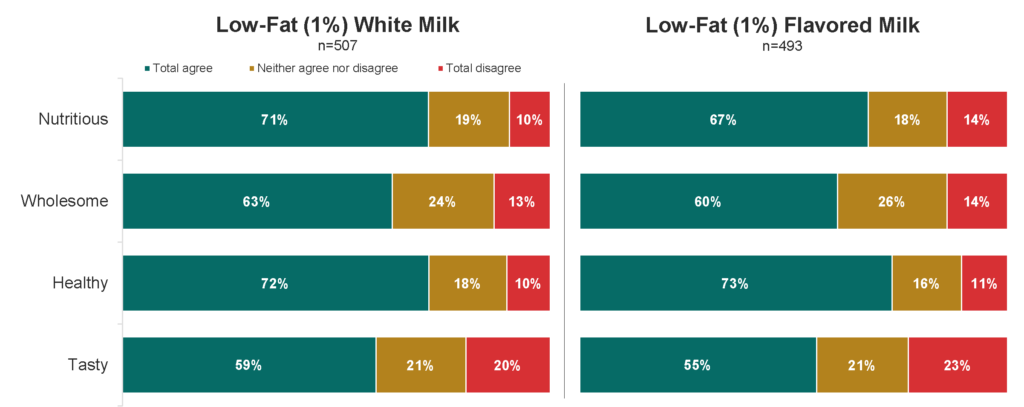
Unflavored and flavored low-fat milk options are also considered nutritious, wholesome, and healthy. Parents rate flavored and unflavored low-fat milk similarly across attributes.
Do you agree or disagree that each of the following words you believe describe low fat (1%) white milk/ low fat (1%) flavored milk?
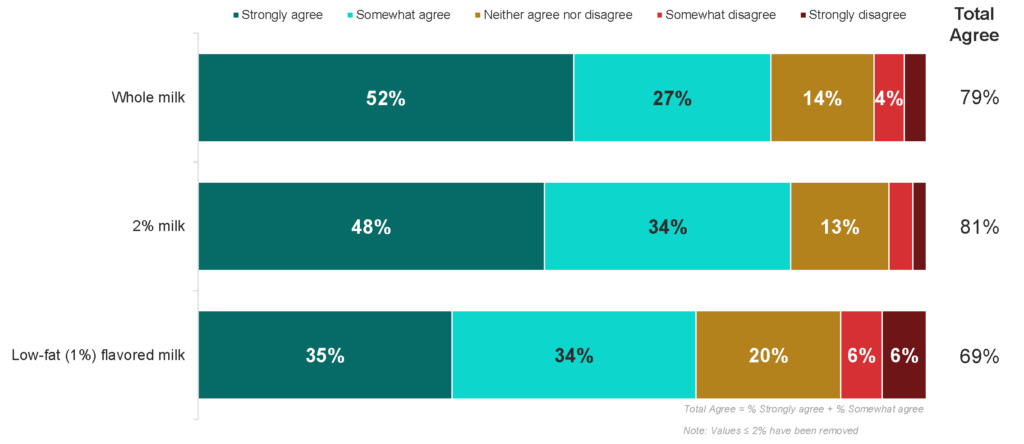
Parents support the availability of whole milk, 2% milk, and low-fat flavored milk in public schools in their community. Support is slightly stronger for higher fat options, with half of adults strongly supporting the availability of whole or 2% milks in school meals.
Do you agree or disagree that the following should be an option for children in public school meals in your community?
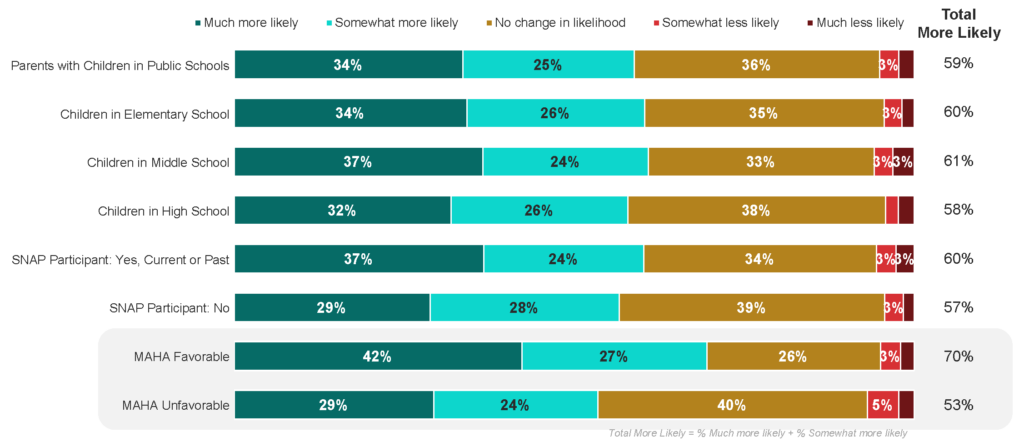
Most parents indicate an increased likelihood to have their children participate in school meals if the school provided whole or 2% milk as options– particularly parents with a favorable view of MAHA. Few parents say they are less likely to take advantage of meal plans as a result.
Congress recently passed a bill allowing schools to provide whole and 2% milk to students nationwide. Would you be more or less likely to have your child participate in school lunch or breakfast if his or her school provides whole or 2% milk as options?