Welcome to the IDFA Bookstore
Please note that you must be logged in to receive member pricing. If you would like to make payment via check, please download our Printable Order Form.
HACCP
Your primary HACCP desk reference. This manual outlines the prerequisite Good Manufacturing Practices (GMPs) and seven principles of Hazard Analysis and Critical Control Points (HACCP) protocol for product safety. The manual also contains model HACCP programs for a wide variety of dairy processing facilities, including fluid, cultured, cheese, frozen desserts and dry dairy product operations. A must for any dairy operations facility.
A multiple user discount is available. for more information, contact Diana Carmentates, IDFA vice president of meetings and educational services, at (202) 220-3504.
File size: 293 pages, 1.31 MB
IIDFA has bundled its three premium HACCP manuals and associated software into one product package for easier purchase. The 2009 versions of the "Dairy Product HACCP Manual," the "Juice Product HACCP Manual," the "HACCP Reference Manual" and the "HACCPlan.net" software contain everything modern dairy plant managers and quality assurance staff need to create, implement and update their HACCP programs.
This valuable resource bundle will help users to meet the HACCP requirements for all third-party certification systems that are recognized by the Global Food Safety Initiative (GFSI), such as Safe Quality Foods (SQF), the British Retail Consortium (BRC) and the Food Standard Safety Certification (FSSC - ISO 2200 based). These certification systems are critical for retaining existing customers, growing business volume and ensuring product safety and quality to customers.
Everything you ever wanted or needed to know about dairy and juice HACCP is contained in this unique HACCP reference manual. In addition to compiling HACCP information and references from NACMCF, Codex, US FDA and the NCIMS, it contains a "HACCP Toolkit" of IDFA-developed user-friendly HACCP forms and examples covering the organizing of the HACCP Team, developing prerequisites, identifying and evaluating hazards, the IDFA HACCP decision tree and associated hazard analysis form and finally the HACCP Plan. A must have desk reference for any plant producing dairy or juice products that operates its HAACP program to meet SQF, BRC or ISO 22000 standards
Everything you ever wanted or needed to know about dairy and juice HACCP is contained in this unique HACCP reference manual. In addition to compiling HACCP information and references from NACMCF, Codex, US FDA and the NCIMS, it contains a "HACCP Toolkit" of IDFA-developed user-friendly HACCP forms and examples covering the organizing of the HACCP Team, developing prerequisites, identifying and evaluating hazards, the IDFA HACCP decision tree and associated hazard analysis form and finally the HACCP Plan. A must have desk reference for any plant producing dairy or juice products that operates its HAACP program to meet SQF, BRC or ISO 22000 standards.
A multiple user discount is available. for more information, contact Diana Carmentates, IDFA vice president of meetings and educational services, at (202) 220-3504.
File size: 679 pages, 2.62 MB
This computer-based (PC) system will help you develop and maintain a Hazard Analysis and Critical Control Points (HACCP) program. Includes a sample HACCP plan and data base for developing a program for your unique processing environment. Contains model HACCP programs for a wide variety of processing facilities, including fluid milk, juices, cultured, cheese, frozen desserts and dry dairy product operations. Available in English, French and Spanish. This computer-based (PC) system (HACCPLAN.net) will help you develop, maintain, and update your Hazard Analysis and Critical Control Points (HACCP) programs.
User-friendly with a built-in help feature. Allows for easy modification of existing HACCP programs and the use of already created HACCP programs as templates for new HACCP programs, reducing development time once the first HACCP program is created.
Provides for recording of all HACCP program information including written prerequisite programs, product descriptions, product flow diagrams, written hazard analysis and HACCP Plan Summary Tables.
This software can be utilized to develop HACCP programs for any product processed in a dairy plant. Includes a sample milk HACCP program. Beta tests are underway to allow an upgrading of this program for use in Safe Quality Foods (SQF) third party certification systems at level 3.
Once you place an order, you'll receive an email within 24 hours with a link to the software for download.
A juice and juice beverage supplement to the Dairy HACCP manual. This manual contains model HACCP programs for both citrus and non-citrus juice drink operations.
A multiple user discount is available. for more information, contact Diana Carmentates, IDFA vice president of meetings and educational services, at (202) 220-3504.
File size: 170 pages, 629 KB
Industry Information
This comprehensive industry publication provides 116 pages of key statistics on the sales, consumption and production of milk, cheese, cultured products and ice cream products, including total and per capita trends in sales, consumption and production, imports and exports, wholesale and retail prices, nutrition information, and much more. This fact-filled booklet is the most complete resource guide available that puts key data on U.S. and international production, sales, consumption and pricing right at your fingertips.
Substantial volume discounts are available to members.
Download a printable order form.
This comprehensive industry publication provides 116 pages of key statistics on the sales, consumption and production of milk, cheese, cultured products and ice cream products, including total and per capita trends in sales, consumption and production, imports and exports, wholesale and retail prices, nutrition information, and much more. This fact-filled booklet is the most complete resource guide available that puts key data on U.S. and international production, sales, consumption and pricing right at your fingertips.
Download a printable order form.
File Size: 116 pages, 3.55MB
A complete listing of plant codes used on frozen dessert packaging at retail.
A multiple user discount is available. for more information, contact Diana Carmentates, IDFA vice president of meetings and educational services, at (202) 220-3504.
File size: 114 pages, 8.37 MB
The directory provides a complete listing of more than 500 IDFA member companies, representing approximately 85 percent of all dairy foods processed in the United States. Comprehensive profiles of each company are included along with descriptions of IDFA Business Partner and Gold Business Partner supplier companies.
View the Table of Contents to see how easy it is to search for companies by products and services, as well as geographic location.
The $110-billion U.S. dairy industry is complex, with dynamic trends in consumer preferences, farm production, product manufacturing, and government regulations. If you're trying to get a better handle on what makes dairy tick, you'll want to attend this three-part Dairy Industry Orientation webinar with seasoned instructor Bob Yonkers, Ph.D., IDFA vice president and chief economist.
FORMAT: This is an audio recording of the conference call associated with the webinar. This file should play in all modern media players and on all portable devices.
The $110-billion U.S. dairy industry is complex, with dynamic trends in consumer preferences, farm production, product manufacturing, and government regulations. If you're trying to get a better handle on what makes dairy tick, you'll want to attend this three-part Dairy Industry Orientation webinar with seasoned instructor Bob Yonkers, Ph.D., IDFA vice president and chief economist.
FORMAT: This is the PowerPoint presentation associated with the webinar. This file requires Microsoft PowerPoint to open.
The $110-billion U.S. dairy industry is complex, with dynamic trends in consumer preferences, farm production, product manufacturing, and government regulations. If you're trying to get a better handle on what makes dairy tick, you'll want to attend this three-part Dairy Industry Orientation webinar with seasoned instructor Bob Yonkers, Ph.D., IDFA vice president and chief economist.
FORMAT: This is a Video M4V file that, once downloaded, will synchronize the slides and audio. It can be played on any modern media player, including your computer, or other portable device.
Labeling
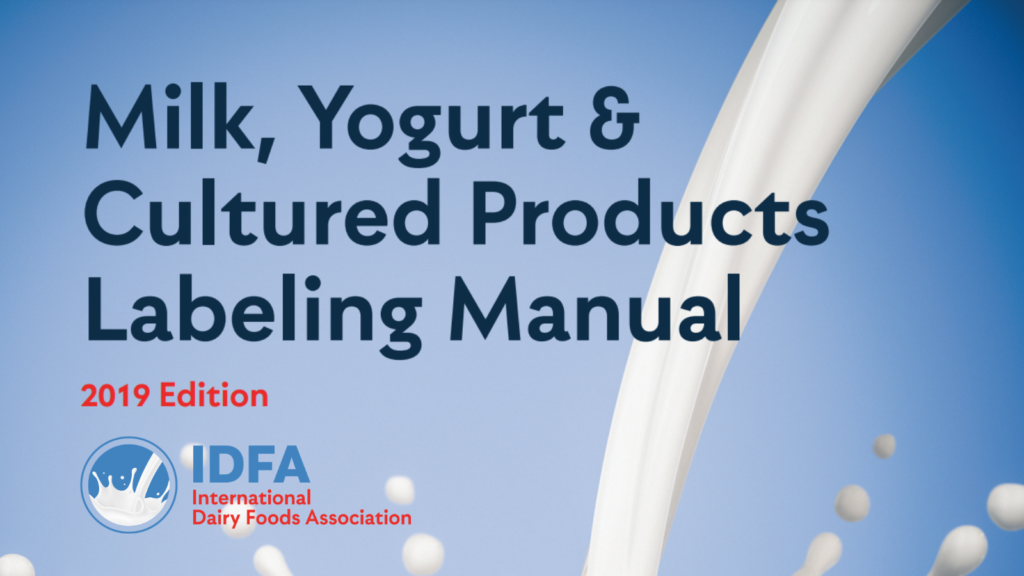
IDFA's labeling manuals for milk and milk products, cheese, and ice cream and frozen desserts have been fully revised and updated with new information on nutrient content claims, qualified health claims and structure/function claims. The new content offers comprehensive details on all aspects of labeling, such as standards of identity and product name, net contents statements, ingredient listing, allergen information and other claims.
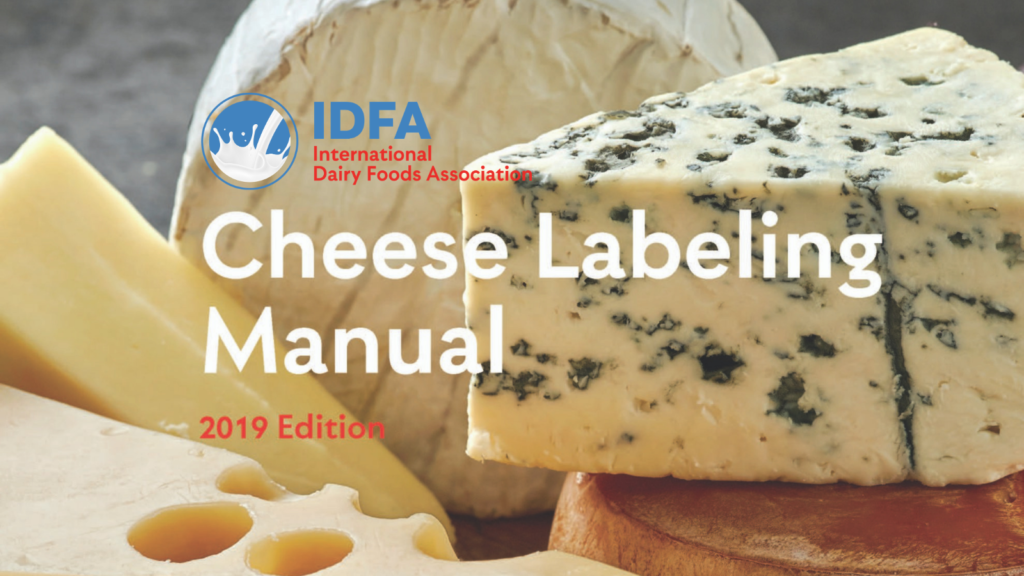
The Cheese Labeling Manual also covers country-of-origin labeling, as well as natural, organic and bulk-product labeling for cheese are explained. In-depth information on nutritional labeling is included along with a nutrient database for 28 varieties of cheese.
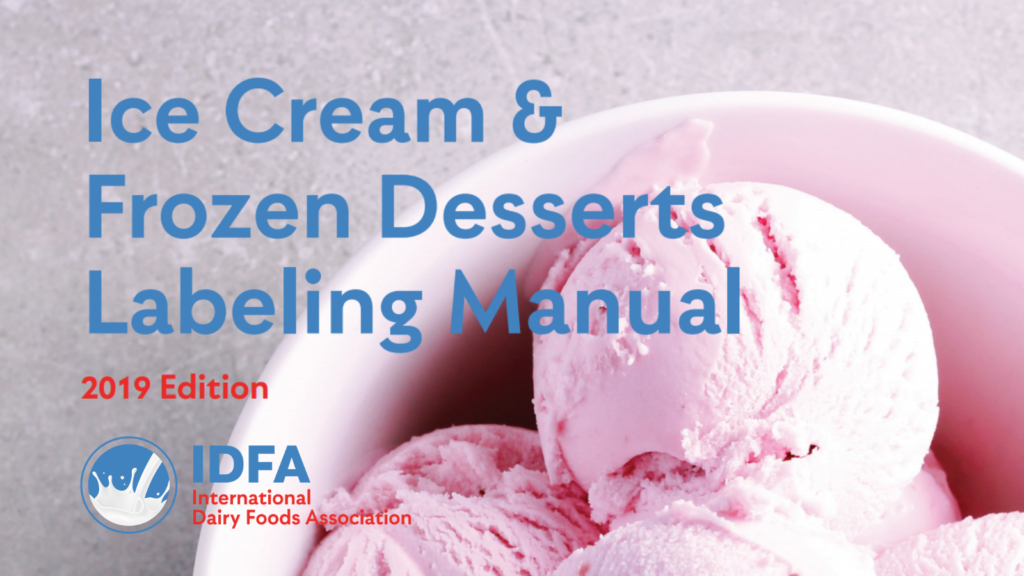
The Ice Cream and Frozen Desserts Labeling Manual also includes flavor labeling requirements for ice cream, sherbet and non-standard frozen desserts.
A reference chart shows at a glance the key labeling requirements and exemptions for retail, foodservice and bulk foods. It also includes dairy product examples and a database for calculating nutrition values.
This manual is a must-have reference for anyone responsible for product labeling and compliance. It is available in print, as well as an electronic PDF version that is fully searchable and compatible with laptops and iPads.
These manuals provide illustrated labels and label formats for dairy products and easy-to-use tables that help simplify FDA’s complex labeling regulations.
View the Cheese Labeling Manual Table of Contents here.
View the Ice Cream Labeling and Frozen Desserts Manual Table of Contents here.
View the Milk and Milk Products Table of Contents here.
IDFA's labeling manuals for milk and milk products, cheese, and ice cream and frozen desserts have been fully revised and updated with new information on nutrient content claims, qualified health claims and structure/function claims. The new content offers comprehensive details on all aspects of labeling, such as standards of identity and product name, net contents statements, ingredient listing, allergen information and other claims.
The Cheese Labeling Manual also covers country-of-origin labeling, as well as natural, organic and bulk-product labeling for cheese are explained. In-depth information on nutritional labeling is included along with a nutrient database for 28 varieties of cheese.
The Ice Cream and Frozen Desserts Labeling Manual also includes flavor labeling requirements for ice cream, sherbet and non-standard frozen desserts.
A reference chart shows at a glance the key labeling requirements and exemptions for retail, foodservice and bulk foods. It also includes dairy product examples and a database for calculating nutrition values.
This manual is a must-have reference for anyone responsible for product labeling and compliance. It is available in print, as well as an electronic PDF version that is fully searchable and compatible with laptops and iPads.
These manuals provide illustrated labels and label formats for dairy products and easy-to-use tables that help simplify FDA’s complex labeling regulations.
View the Cheese Labeling Manual Table of Contents here.
View the Ice Cream Labeling and Frozen Desserts Manual Table of Contents here.
View the Milk and Milk Products Table of Contents here.
*Manuals provided as a ZIP file containing separate PDFs, size: 15 MB
IDFA's Cheese Labeling Manual and Ice Cream and Frozen Desserts Labeling Manual have been fully revised and updated with new information on nutrient content claims, qualified health claims and structure/function claims. The new content offers comprehensive details on all aspects of labeling, such as standards of identity and product name, net contents statements, ingredient listing, allergen information and other claims.
The Cheese Labeling Manual also covers country-of-origin labeling, as well as natural, organic and bulk-product labeling for cheese are explained. In-depth information on nutritional labeling is included along with a nutrient database for 28 varieties of cheese.
The Ice Cream and Frozen Desserts Labeling Manual also includes flavor labeling requirements for ice cream, sherbet and non-standard frozen desserts.
A reference chart shows at a glance the key labeling requirements and exemptions for retail, foodservice and bulk foods. It also includes dairy product examples and a database for calculating nutrition values.
This manual is a must-have reference for anyone responsible for product labeling and compliance. It is available in print, as well as an electronic PDF version that is fully searchable and compatible with laptops and iPads.
These manuals provide illustrated labels and label formats for dairy products and easy-to-use tables that help simplify FDA’s complex labeling regulations.
View the Cheese Labeling Manual Table of Contents here.
View the Ice Cream Labeling and Frozen Desserts Manual Table of Contents here.
IDFA's Cheese Labeling Manual and Ice Cream and Frozen Desserts Labeling Manual have been fully revised and updated with new information on nutrient content claims, qualified health claims and structure/function claims. The new content offers comprehensive details on all aspects of labeling, such as standards of identity and product name, net contents statements, ingredient listing, allergen information and other claims.
The Cheese Labeling Manual also covers country-of-origin labeling, as well as natural, organic and bulk-product labeling for cheese are explained. In-depth information on nutritional labeling is included along with a nutrient database for 28 varieties of cheese.
The Ice Cream and Frozen Desserts Labeling Manual also includes flavor labeling requirements for ice cream, sherbet and non-standard frozen desserts.
A reference chart shows at a glance the key labeling requirements and exemptions for retail, foodservice and bulk foods. It also includes dairy product examples and a database for calculating nutrition values.
This manual is a must-have reference for anyone responsible for product labeling and compliance. It is available in print, as well as an electronic PDF version that is fully searchable and compatible with laptops and iPads.
These manuals provide illustrated labels and label formats for dairy products and easy-to-use tables that help simplify FDA’s complex labeling regulations.
View the Cheese Labeling Manual Table of Contents here.
View the Ice Cream Labeling and Frozen Desserts Manual Table of Contents here.
*Manuals provided as a ZIP file containing separate PDFs, size: 10 MB
IDFA's Milk and Milk Products Labeling Manual and Cheese Labeling Manual have been fully revised and updated with new information on nutrient content claims, qualified health claims and structure/function claims. The new content offers comprehensive details on all aspects of labeling, such as standards of identity and product name, net contents statements, ingredient listing, allergen information and other claims.
The Cheese Labeling Manual also covers country-of-origin labeling, as well as natural, organic and bulk-product labeling for cheese are explained. In-depth information on nutritional labeling is included along with a nutrient database for 28 varieties of cheese.
A reference chart shows at a glance the key labeling requirements and exemptions for retail, foodservice and bulk foods. It also includes dairy product examples and a database for calculating nutrition values.
This manual is a must-have reference for anyone responsible for product labeling and compliance. It is available in print, as well as an electronic PDF version that is fully searchable and compatible with laptops and iPads.
These manuals provide illustrated labels and label formats for dairy products and easy-to-use tables that help simplify FDA’s complex labeling regulations.
IDFA's Milk and Milk Products Labeling Manual and Cheese Labeling Manual have been fully revised and updated with new information on nutrient content claims, qualified health claims and structure/function claims. The new content offers comprehensive details on all aspects of labeling, such as standards of identity and product name, net contents statements, ingredient listing, allergen information and other claims.
The Cheese Labeling Manual also covers country-of-origin labeling, as well as natural, organic and bulk-product labeling for cheese are explained. In-depth information on nutritional labeling is included along with a nutrient database for 28 varieties of cheese.
A reference chart shows at a glance the key labeling requirements and exemptions for retail, foodservice and bulk foods. It also includes dairy product examples and a database for calculating nutrition values.
This manual is a must-have reference for anyone responsible for product labeling and compliance. It is available in print, as well as an electronic PDF version that is fully searchable and compatible with laptops and iPads.
These manuals provide illustrated labels and label formats for dairy products and easy-to-use tables that help simplify FDA’s complex labeling regulations.
View the Cheese Labeling Manual Table of Contents here.
View the Milk and Milk Products Table of Contents here.
*Manuals provided as a ZIP file containing separate PDFs, size: 9 MB
IDFA's Milk and Milk Products Labeling Manual and Cheese Labeling Manual have been fully revised and updated with new information on nutrient content claims, qualified health claims and structure/function claims. The new content offers comprehensive details on all aspects of labeling, such as standards of identity and product name, net contents statements, ingredient listing, allergen information and other claims.
The Ice Cream and Frozen Desserts Labeling Manual also includes flavor labeling requirements for ice cream, sherbet and non-standard frozen desserts.
A reference chart shows at a glance the key labeling requirements and exemptions for retail, foodservice and bulk foods. It also includes dairy product examples and a database for calculating nutrition values.
This manual is a must-have reference for anyone responsible for product labeling and compliance. It is available in print, as well as an electronic PDF version that is fully searchable and compatible with laptops and iPads.
These manuals provide illustrated labels and label formats for dairy products and easy-to-use tables that help simplify FDA’s complex labeling regulations.
View the Ice Cream Labeling and Frozen Desserts Manual Table of Contents here.
IDFA's Milk and Milk Products Labeling Manual and Cheese Labeling Manual have been fully revised and updated with new information on nutrient content claims, qualified health claims and structure/function claims. The new content offers comprehensive details on all aspects of labeling, such as standards of identity and product name, net contents statements, ingredient listing, allergen information and other claims.
The Ice Cream and Frozen Desserts Labeling Manual also includes flavor labeling requirements for ice cream, sherbet and non-standard frozen desserts.
A reference chart shows at a glance the key labeling requirements and exemptions for retail, foodservice and bulk foods. It also includes dairy product examples and a database for calculating nutrition values.
This manual is a must-have reference for anyone responsible for product labeling and compliance. It is available in print, as well as an electronic PDF version that is fully searchable and compatible with laptops and iPads.
These manuals provide illustrated labels and label formats for dairy products and easy-to-use tables that help simplify FDA’s complex labeling regulations.
View the Ice Cream Labeling and Frozen Desserts Manual Table of Contents here.
View the Milk and Milk Products Table of Contents here.
*Manuals provided as a ZIP file containing separate PDFs, size: 10 MB
This series will provide you and your staff with the information you need to produce compliant and effective labels for your products. The three sessions -- Introduction to Labeling, Nutrition Labeling and Claims and Labeling Hot Topics -- will be interactive, allowing for participants' questions.
FORMAT: This is an audio recording of the conference call associated with the webinar. This file should play in all modern media players and on all portable devices.
This series will provide you and your staff with the information you need to produce compliant and effective labels for your products. The three sessions -- Introduction to Labeling, Nutrition Labeling and Claims and Labeling Hot Topics -- will be interactive, allowing for participants' questions.
FORMAT: This is the PowerPoint presentation associated with the webinar. This file requires Microsoft PowerPoint to open.
This series will provide you and your staff with the information you need to produce compliant and effective labels for your products. The three sessions -- Introduction to Labeling, Nutrition Labeling and Claims and Labeling Hot Topics -- will be interactive, allowing for participants' questions.
FORMAT: This is a Video M4V file that, once downloaded, will synchronize the slides and audio. It can be played on any modern media player, including your computer, or other portable device.
The Cheese Labeling Manual is fully revised and provides updated information on nutrient content claims, qualified health claims and structure/function claims. The new content offers comprehensive details on all aspects of labeling, such as standards of identity and product name, net contents statements, ingredient listing, allergen information and other claims. Country-of-origin labeling, as well as natural, organic and bulk-product labeling for cheese are explained.
In-depth information on nutritional labeling is included along with a nutrient database for 28 varieties of cheese. A reference chart shows at a glance the key labeling requirements and exemptions for retail, foodservice and bulk foods. It also includes dairy product examples and a database for calculating nutrition values.
This manual is a must-have reference for anyone responsible for product labeling and compliance. It is available in print, as well as an electronic PDF version that is fully searchable and compatible with laptops and iPads.
The 528-page manual provides illustrated labels and label formats for dairy products and easy-to-use tables that help simplify FDA’s complex labeling regulations. View the Table of Contents here.
The Cheese Labeling Manual is fully revised and provides updated information on nutrient content claims, qualified health claims and structure/function claims. The new content offers comprehensive details on all aspects of labeling, such as standards of identity and product name, net contents statements, ingredient listing, allergen information and other claims. Country-of-origin labeling, as well as natural, organic and bulk-product labeling for cheese are explained.
In-depth information on nutritional labeling is included along with a nutrient database for 28 varieties of cheese. A reference chart shows at a glance the key labeling requirements and exemptions for retail, foodservice and bulk foods. It also includes dairy product examples and a database for calculating nutrition values.
This manual is a must-have reference for anyone responsible for product labeling and compliance. It is available in print, as well as an electronic PDF version that is fully searchable and compatible with laptops and iPads.
The 528-page manual provides illustrated labels and label formats for dairy products and easy-to-use tables that help simplify FDA’s complex labeling regulations. View the Table of Contents here.
File size: 7.58 MB
The Ice Cream and Frozen Desserts Labeling Manual is fully revised with updated information on nutrient content claims, qualified health claims and structure/function claims. New additions include comprehensive information on all aspects of labeling, such as standards of identity and product name, net contents statements, ingredient listing, allergen information, nutrition labeling and other claims. Flavor labeling requirements for ice cream, sherbet and non-standard frozen desserts are also explained.
The 426-page manual provides illustrated labels and label formats for dairy products and easy-to-use tables that help simplify FDA’s complex labeling regulations. A reference chart shows at a glance the key labeling requirements and exemptions for retail, foodservice and bulk foods, as well as dairy product examples and a database for calculating nutrition values.
View the Table of Contents here.
This manual is a must-have reference for dairy professionals who are responsible for product labeling and compliance. It is available in print and a fully searchable PDF version that is compatible with desktops, laptops and iPads.
The Ice Cream and Frozen Desserts Labeling Manual is fully revised with updated information on nutrient content claims, qualified health claims and structure/function claims. New additions include comprehensive information on all aspects of labeling, such as standards of identity and product name, net contents statements, ingredient listing, allergen information, nutrition labeling and other claims. Flavor labeling requirements for ice cream, sherbet and non-standard frozen desserts are also explained.
The 426-page manual provides illustrated labels and label formats for dairy products and easy-to-use tables that help simplify FDA’s complex labeling regulations. A reference chart shows at a glance the key labeling requirements and exemptions for retail, foodservice and bulk foods, as well as dairy product examples and a database for calculating nutrition values.
View the Table of Contents here.
This manual is a must-have reference for dairy professionals who are responsible for product labeling and compliance. It is available in print and a fully searchable PDF version that is compatible with desktops, laptops and iPads.
File size: 7.79 MB
The Milk and Milk Products Labeling Manual is fully revised and provides updated information on nutrient content claims, qualified health claims and structure/function claims. The new content includes comprehensive information on all aspects of labeling, such as standards of identity and product name, net contents statements, ingredient listing, allergen information, nutrition labeling and other claims. A reference chart shows at a glance, the key labeling requirements and exemptions for retail, foodservice and bulk foods, along with dairy product examples and a database for calculating nutrition values.
This manual is a must-have reference for anyone responsible for product labeling and compliance! It is available in print, as well as an electronic PDF version that is fully searchable and compatible with laptops and iPads. The 450-page manual provides illustrated labels and label formats for dairy products and easy-to-use tables that help simplify FDA’s complex labeling regulations. View the Table of Contents here.
The Milk and Milk Products Labeling Manual is fully revised and provides updated information on nutrient content claims, qualified health claims and structure/function claims. The new content includes comprehensive information on all aspects of labeling, such as standards of identity and product name, net contents statements, ingredient listing, allergen information, nutrition labeling and other claims. A reference chart shows at a glance, the key labeling requirements and exemptions for retail, foodservice and bulk foods, along with dairy product examples and a database for calculating nutrition values.
This manual is a must-have reference for anyone responsible for product labeling and compliance! It is available in print, as well as an electronic PDF version that is fully searchable and compatible with laptops and iPads. The 450-page manual provides illustrated labels and label formats for dairy products and easy-to-use tables that help simplify FDA’s complex labeling regulations. View the Table of Contents here.
A multiple user discount is available. for more information, contact Diana Carmentates, IDFA vice president of meetings and educational services, at (202) 220-3504.
File size: 454 pages, 7.95 MB
Operations
A better-funded Food and Drug Administration (FDA) with many new field investigators has embarked on a massive new initiative to inspect food plants, taking large numbers of environmental samples and follow-up food samples. IDFA's revised FDA Inspection Manual & Recall Guide has been designed to provide member companies with the guidance and information they need to help prepare for facility inspections and to develop effective plans for recalls and crisis management. This is a "must read" in today's sometimes confrontational regulatory atmosphere.
A multiple user discount is available. for more information, contact Diana Carmentates, IDFA vice president of meetings and educational services, at (202) 220-3504.
File size: 29 pages, 3.16 MB
Are your allergen labels up to date and in compliance? How do you guard against allergen cross-contact in your plants? IDFA's newly revised Allergens Guidelines and Best Industry Practices for the dairy industry answers these questions and many more related to allergen labeling and in-plant management. It is now available to members for $80 and to non-members for $100.
A practical guide to managing allergens, the manual discusses how to set up an allergen-awareness program in plants and includes examples of best practices that will reduce the possibility of cross-contact. One updated section takes an in-depth look at the federal allergen labeling requirements that were mandated by the 2004 Food Allergen Labeling and Consumer Protection Act and went into full effect in 2006. Another new section reviews the voluntary use of food allergy icons that can provide easily recognizable symbols in manufacturing plants and warehouses.
This manual addresses these regulations: Clean Air Act, Clean Water Act, Toxic Substances Control Act, and Emergency Planning and Community Right-to-Know Act.
An outbreak of Foot-and-Mouth Disease (FMD) in U.S. cattle could wreak havoc on the milk supply and create distribution and public relations headaches for dairy companies within just a few days. To help companies plan ahead, IDFA has carefully prepared a new publication to serve as an off-the-shelf crisis manual, with specific instructions on how dairy corporate headquarters, plant operations, and milk haulers will be forced by state and federal government regulations to respond if FMD hits. The manual also provides guidance on what dairy companies should be doing today to soften the blow of an outbreak and includes a crisis communications section, which may be helpful in any type of plant emergency.
Volume discounts are available on five or more FMD manuals in one order; contact the IDFA Educational Services department for more details at publications@idfa.org, (202) 737-4332.
A better-funded Food and Drug Administration (FDA) with many new field investigators has embarked on a massive new initiative to inspect food plants, taking large numbers of environmental samples and follow-up product samples. FDA investigators will assert they can take cameras and video equipment into dairy plants, as well as request access to processing and other records that they are not legally entitled to receive during most routine inspections.
Do you and your plant staff know the regulatory background being used by FDA investigators, including limits on their authority, as well as legal protections afforded the dairy processing industry? If not, this webinar will prepare you for your next FDA inspection. Learn the regulatory basis for FDA's authority and practical tools for dealing with FDA investigators in today's sometimes confrontational atmosphere from Martin Hahn, partner, Hogan Lovells US LLP, a leading expert in advising food plants on how to survive FDA investigations.
FORMAT: This is an audio recording of the conference call associated with the webinar. This file should play in all modern media players and on all portable devices.
A better-funded Food and Drug Administration (FDA) with many new field investigators has embarked on a massive new initiative to inspect food plants, taking large numbers of environmental samples and follow-up product samples. FDA investigators will assert they can take cameras and video equipment into dairy plants, as well as request access to processing and other records that they are not legally entitled to receive during most routine inspections.
Do you and your plant staff know the regulatory background being used by FDA investigators, including limits on their authority, as well as legal protections afforded the dairy processing industry? If not, this webinar will prepare you for your next FDA inspection. Learn the regulatory basis for FDA's authority and practical tools for dealing with FDA investigators in today's sometimes confrontational atmosphere from Martin Hahn, partner, Hogan Lovells US LLP, a leading expert in advising food plants on how to survive FDA investigations.
FORMAT: This is the PowerPoint presentation associated with the webinar. This file requires Microsoft PowerPoint to open.
A better-funded Food and Drug Administration (FDA) with many new field investigators has embarked on a massive new initiative to inspect food plants, taking large numbers of environmental samples and follow-up product samples. FDA investigators will assert they can take cameras and video equipment into dairy plants, as well as request access to processing and other records that they are not legally entitled to receive during most routine inspections.
Do you and your plant staff know the regulatory background being used by FDA investigators, including limits on their authority, as well as legal protections afforded the dairy processing industry? If not, this webinar will prepare you for your next FDA inspection. Learn the regulatory basis for FDA's authority and practical tools for dealing with FDA investigators in today's sometimes confrontational atmosphere from Martin Hahn, partner, Hogan Lovells US LLP, a leading expert in advising food plants on how to survive FDA investigations.
FORMAT: This is a Video M4V file that, once downloaded, will synchronize the slides and audio. It can be played on any modern media player, including your computer, or other portable device.
Every dairy processing plant executive wants to maximize capacity from existing assets. This webinar, sponsored by IDFA Business Partner Invensys Operations Management, presents ways to improve efficiency and the bottom line through improved clean-in-place strategies and packaging operations.
It covers how to increase packaging line productivity through improved measuring equipment and line data. It also shows how real-time information and control will help you to reduce your environmental footprint, mitigate food-quality risks and significantly impact unit costs and chemical usage.
The presenters are Yves Dufort, director of global industry solutions, food, beverage and CPG industry with Invensys Operations Management; Steve Ford, controls engineering manager for Mars Chocolate Division, North America; and Kirby Powell, director of automation/information technology with Kline Process Systems.
FORMAT: This is an audio recording of the conference call associated with the webinar. This file should play in all modern media players and on all portable devices.
Every dairy processing plant executive wants to maximize capacity from existing assets. This webinar, sponsored by IDFA Business Partner Invensys Operations Management, presents ways to improve efficiency and the bottom line through improved clean-in-place strategies and packaging operations.
It covers how to increase packaging line productivity through improved measuring equipment and line data. It also shows how real-time information and control will help you to reduce your environmental footprint, mitigate food-quality risks and significantly impact unit costs and chemical usage.
The presenters are Yves Dufort, director of global industry solutions, food, beverage and CPG industry with Invensys Operations Management; Steve Ford, controls engineering manager for Mars Chocolate Division, North America; and Kirby Powell, director of automation/information technology with Kline Process Systems.
FORMAT: This is the PowerPoint presentation associated with the webinar. This file requires Microsoft PowerPoint to open.
Every dairy processing plant executive wants to maximize capacity from existing assets. This webinar, sponsored by IDFA Business Partner Invensys Operations Management, presents ways to improve efficiency and the bottom line through improved clean-in-place strategies and packaging operations.
It covers how to increase packaging line productivity through improved measuring equipment and line data. It also shows how real-time information and control will help you to reduce your environmental footprint, mitigate food-quality risks and significantly impact unit costs and chemical usage.
The presenters are Yves Dufort, director of global industry solutions, food, beverage and CPG industry with Invensys Operations Management; Steve Ford, controls engineering manager for Mars Chocolate Division, North America; and Kirby Powell, director of automation/information technology with Kline Process Systems.
FORMAT: This is a Video M4V file that, once downloaded, will synchronize the webinar slides and audio. It can be played on any modern media player, including your computer or other portable device.
This webinar, sponsored by Invensys Operations Management, provides practical solutions to food safety data collection and recording challenges in dairy plants. It also explores best practices for monitoring Corrective Action Plans (CAP), developing Standard Sanitation Operating Procedures (SSOP), monitoring Critical Limits (CL) and documenting process deviations.
The presenters are Rudy Westervelt, president of Power in Learning, and Tom Giunta, director, food and beverage industry business development, Invensys Operations Management. Westervelt has more than 30 years of management experience, including 10 years as general manager of two dairy manufacturing plants. Giunta has an extensive, successful track record of helping customers achieve excellence in operations management.
FORMAT: This is an audio recording of the conference call associated with the webinar. This file should play in all modern media players and on all portable devices.
This webinar, sponsored by Invensys Operations Management, provides practical solutions to food safety data collection and recording challenges in dairy plants. It also explores best practices for monitoring Corrective Action Plans (CAP), developing Standard Sanitation Operating Procedures (SSOP), monitoring Critical Limits (CL) and documenting process deviations.
The presenters are Rudy Westervelt, president of Power in Learning, and Tom Giunta, director, food and beverage industry business development, Invensys Operations Management. Westervelt has more than 30 years of management experience, including 10 years as general manager of two dairy manufacturing plants. Giunta has an extensive, successful track record of helping customers achieve excellence in operations management.
FORMAT: This is the PowerPoint presentation associated with the webinar. This file requires Microsoft PowerPoint to open.
This webinar, sponsored by Invensys Operations Management, provides practical solutions to food safety data collection and recording challenges in dairy plants. It also explores best practices for monitoring Corrective Action Plans (CAP), developing Standard Sanitation Operating Procedures (SSOP), monitoring Critical Limits (CL) and documenting process deviations.
The presenters are Rudy Westervelt, president of Power in Learning, and Tom Giunta, director, food and beverage industry business development, Invensys Operations Management. Westervelt has more than 30 years of management experience, including 10 years as general manager of two dairy manufacturing plants. Giunta has an extensive, successful track record of helping customers achieve excellence in operations management.
FORMAT: This is a Video M4V file that, once downloaded, will synchronize the webinar slides and audio. It can be played on any modern media player, including your computer or other portable device.
Under the new Food Safety Modernization Act (FSMA), inspections by the Food and Drug Administration could be considerably different from inspections that dairy companies experienced in the past. Although President Obama signed the landmark legislation into law 18 months ago, FDA is continuing to develop more than 50 new rules and guidance documents that will be required to implement all aspects of the act.
Questions remain, however, regarding whether dairy plants will be expected to comply with some of FSMA’s provisions now, even without proposed or final rules in some areas. This webinar will help member dairy companies understand the rule changes that have already taken place, the ones that will occur in the near future and others that will occur this summer.
The presenter is food safety expert Joseph A. Levitt, a partner in the Washington, D.C., office of Hogan Lovells US LLP. Before joining the firm in 2004, Levitt worked at FDA for 25 years, where he served as director of FDA’s Center for Food Safety and Applied Nutrition from 1998 through 2003. He currently serves as outside regulatory counsel to IDFA.
FORMAT: This is an audio recording of the conference call associated with the webinar. It should play in all modern media players and on all portable devices.
Under the new Food Safety Modernization Act (FSMA), inspections by the Food and Drug Administration could be considerably different from inspections that dairy companies experienced in the past. Although President Obama signed the landmark legislation into law 18 months ago, FDA is continuing to develop more than 50 new rules and guidance documents that will be required to implement all aspects of the act.
Questions remain, however, regarding whether dairy plants will be expected to comply with some of FSMA’s provisions now, even without proposed or final rules in some areas. This webinar will help member dairy companies understand the rule changes that have already taken place, the ones that will occur in the near future and others that will occur this summer.
The presenter is food safety expert Joseph A. Levitt, a partner in the Washington, D.C., office of Hogan Lovells US LLP. Before joining the firm in 2004, Levitt worked at FDA for 25 years, where he served as director of FDA’s Center for Food Safety and Applied Nutrition from 1998 through 2003. He currently serves as outside regulatory counsel to IDFA.
FORMAT: This is the PowerPoint presentation associated with the webinar. This file requires Microsoft PowerPoint to open.
Under the new Food Safety Modernization Act (FSMA), inspections by the Food and Drug Administration could be considerably different from inspections that dairy companies experienced in the past. Although President Obama signed the landmark legislation into law 18 months ago, FDA is continuing to develop more than 50 new rules and guidance documents that will be required to implement all aspects of the act.
Questions remain, however, regarding whether dairy plants will be expected to comply with some of FSMA’s provisions now, even without proposed or final rules in some areas. This webinar will help member dairy companies understand the rule changes that have already taken place, the ones that will occur in the near future and others that will occur this summer.
The presenter is food safety expert Joseph A. Levitt, a partner in the Washington, D.C., office of Hogan Lovells US LLP. Before joining the firm in 2004, Levitt worked at FDA for 25 years, where he served as director of FDA’s Center for Food Safety and Applied Nutrition from 1998 through 2003. He currently serves as outside regulatory counsel to IDFA.
FORMAT: This is a Video M4V file that, once downloaded, will synchronize the webinar slides and audio. It can be played on any modern media player, including your computer or other portable device.
This webinar, sponsored by IDFA Business Partner Invensys Control Systems, explains how dairy processors can measure and manage shrinkage. Learn how to reduce milk loss by 5% to 30%, measure energy consumption and reduce usage by 3% to 15%, eliminate waste water surcharges and transform operations to sustain these improvements.
The presenters are Rudy Westervelt, 30-year executive with The Kroger Company, including 10 years managing dairy operations, and Pat McGuff, executive vice president of Masterleo & Associates, a 30+ year compliance and quality assurance partner for food and dairy processors.
FORMAT: This is an audio recording of the conference call associated with the webinar. This file should play in all modern media players and on all portable devices.
This webinar, sponsored by IDFA Business Partner Invensys Control Systems, explains how dairy processors can measure and manage shrinkage. Learn how to reduce milk loss by 5% to 30%, measure energy consumption and reduce usage by 3% to 15%, eliminate waste water surcharges and transform operations to sustain these improvements.
The presenters are Rudy Westervelt, 30-year executive with The Kroger Company, including 10 years managing dairy operations, and Pat McGuff, executive vice president of Masterleo & Associates, a 30+ year compliance and quality assurance partner for food and dairy processors.
FORMAT: This is the PowerPoint presentation associated with the webinar. This file requires Microsoft PowerPoint to open.
This webinar, sponsored by IDFA Business Partner Invensys Control Systems, explains how dairy processors can measure and manage shrinkage. Learn how to reduce milk loss by 5% to 30%, measure energy consumption and reduce usage by 3% to 15%, eliminate waste water surcharges and transform operations to sustain these improvements.
The presenters are Rudy Westervelt, 30-year executive with The Kroger Company, including 10 years managing dairy operations, and Pat McGuff, executive vice president of Masterleo & Associates, a 30+ year compliance and quality assurance partner for food and dairy processors.
FORMAT: This is a Video M4V file that, once downloaded, will synchronize the webinar slides and audio. It can be played on any modern media player, including your computer or other portable device.
Pathogen testing is an important part of any Hazard Analysis & Critical Control Points (HACCP) program, and balancing accurate results with rapid turnaround time is ideal. This webinar, sponsored by Bio-Rad Laboratories, demonstrates how iQ-Check, Bio-Rad's trademark testing kit, allows for quicker release of product and increases productivity while providing superior results.
The presenters are Michael Clark, laboratory director of Chestnut Labs, and Wendy Lauer, senior product manager, Food Science Division, Bio-Rad Laboratories.
FORMAT: This is an audio recording of the conference call associated with the webinar. This file should play in all modern media players and on all portable devices.
Pathogen testing is an important part of any Hazard Analysis & Critical Control Points (HACCP) program, and balancing accurate results with rapid turnaround time is ideal. This webinar, sponsored by Bio-Rad Laboratories, demonstrates how iQ-Check, Bio-Rad's trademark testing kit, allows for quicker release of product and increases productivity while providing superior results.
The presenters are Michael Clark, laboratory director of Chestnut Labs, and Wendy Lauer, senior product manager, Food Science Division, Bio-Rad Laboratories.
FORMAT: This is the PowerPoint presentation associated with the webinar. This file requires Microsoft PowerPoint to open.
Pathogen testing is an important part of any Hazard Analysis & Critical Control Points (HACCP) program, and balancing accurate results with rapid turnaround time is ideal. This webinar, sponsored by Bio-Rad Laboratories, demonstrates how iQ-Check, Bio-Rad's trademark testing kit, allows for quicker release of product and increases productivity while providing superior results.
The presenters are Michael Clark, laboratory director of Chestnut Labs, and Wendy Lauer, senior product manager, Food Science Division, Bio-Rad Laboratories.
FORMAT: This is a Video M4V file that, once downloaded, will synchronize the webinar slides and audio. It can be played on any modern media player, including your computer or other portable device.
This webinar will help dairy processors protect and enhance their products and brands by improving production efficiency. Presenter Mathieu Loranger, an engineer for Danone Canada, discusses a new technology that allows companies to integrate their automated manufacturing systems with powerful tools for manufacturing workflow management. This integration will improve product quality, reduce manual data entries, decrease waste and enhance overall production efficiency.
FORMAT: This is an audio recording of the conference call associated with the webinar. This file should play in all modern media players and on all portable devices.
This webinar will help dairy processors protect and enhance their products and brands by improving production efficiency. Presenter Mathieu Loranger, an engineer for Danone Canada, discusses a new technology that allows companies to integrate their automated manufacturing systems with powerful tools for manufacturing workflow management. This integration will improve product quality, reduce manual data entries, decrease waste and enhance overall production efficiency.
FORMAT: This is the PowerPoint presentation associated with the webinar. This file requires Microsoft PowerPoint to open.
This webinar will help dairy processors protect and enhance their products and brands by improving production efficiency. Presenter Mathieu Loranger, an engineer for Danone Canada, discusses a new technology that allows companies to integrate their automated manufacturing systems with powerful tools for manufacturing workflow management. This integration will improve product quality, reduce manual data entries, decrease waste and enhance overall production efficiency.
FORMAT: This is a Video M4V file that, once downloaded, will synchronize the webinar slides and audio. It can be played on any modern media player, including your computer or other portable device.
Congress has just passed the most sweeping piece of food-safety legislation in nearly a century. IDFA's webinar on "Understanding the New Food-Safety Law" covers issues specific to the dairy industry, including new responsibilities for food companies, import controls, enforcement powers for the FDA and fees on U.S. industry and importers.
Learn more about this groundbreaking legislation from webinar presenter Joseph A. Levitt, a partner at Hogan Lovells US LLP and the former director of the Food and Drug Administration's Center for Food Safety and Applied Nutrition. Find out what dairy companies should be doing now to get ready for the law's implementation.
FORMAT: This is an audio recording of the conference call associated with the webinar. This file should play in all modern media players and on all portable devices.
Congress has just passed the most sweeping piece of food-safety legislation in nearly a century. IDFA's webinar on "Understanding the New Food-Safety Law" covers issues specific to the dairy industry, including new responsibilities for food companies, import controls, enforcement powers for the FDA and fees on U.S. industry and importers.
Learn more about this groundbreaking legislation from webinar presenter Joseph A. Levitt, a partner at Hogan Lovells US LLP and the former director of the Food and Drug Administration's Center for Food Safety and Applied Nutrition. Find out what dairy companies should be doing now to get ready for the law's implementation.
FORMAT: This is the PowerPoint presentation associated with the webinar. This file requires Microsoft PowerPoint to open.
Congress has just passed the most sweeping piece of food-safety legislation in nearly a century. IDFA's webinar on "Understanding the New Food-Safety Law" covers issues specific to the dairy industry, including new responsibilities for food companies, import controls, enforcement powers for the FDA and fees on U.S. industry and importers.
Learn more about this groundbreaking legislation from webinar presenter Joseph A. Levitt, a partner at Hogan Lovells US LLP and the former director of the Food and Drug Administration's Center for Food Safety and Applied Nutrition. Find out what dairy companies should be doing now to get ready for the law's implementation.
FORMAT: This is a Video M4V file that, once downloaded, will synchronize the webinar slides and audio. It can be played on any modern media player, including your computer or other portable device.
Every dairy processing plant executive and QA manager wants to reduce the risk of contamination and control water-related costs, whether your plant uses municipal water or your own water supply. This webinar, UV Technology for Improving Water Safety, will show how to assess your water-related risk and protect your plant and your brand from waterborne contamination with advanced UV technology and disinfection strategies.
The presenters are Phyllis Posy, vice president for strategic and regulatory affairs for Atlantium Technologies Ltd, and Charles Gerba, Ph.D., professor, Department of Soil Water and Environmental Science, University of Arizona. , leader and researcher in Environmental Microbiology, author of 11 books and over 300 articles (in the last five years) on food and water safety.
FORMAT: This is an audio recording of the conference call associated with the webinar. This file should play in all modern media players and on all portable devices.
Every dairy processing plant executive and QA manager wants to reduce the risk of contamination and control water-related costs, whether your plant uses municipal water or your own water supply. This webinar, UV Technology for Improving Water Safety, will show how to assess your water-related risk and protect your plant and your brand from waterborne contamination with advanced UV technology and disinfection strategies.
The presenters are Phyllis Posy, vice president for strategic and regulatory affairs for Atlantium Technologies Ltd, and Charles Gerba, Ph.D., professor, Department of Soil Water and Environmental Science, University of Arizona. , leader and researcher in Environmental Microbiology, author of 11 books and over 300 articles (in the last five years) on food and water safety.
FORMAT: This is the PowerPoint presentation associated with the webinar. This file requires Microsoft PowerPoint to open.
Every dairy processing plant executive and QA manager wants to reduce the risk of contamination and control water-related costs, whether your plant uses municipal water or your own water supply. This webinar, UV Technology for Improving Water Safety, will show how to assess your water-related risk and protect your plant and your brand from waterborne contamination with advanced UV technology and disinfection strategies.
The presenters are Phyllis Posy, vice president for strategic and regulatory affairs for Atlantium Technologies Ltd, and Charles Gerba, Ph.D., professor, Department of Soil Water and Environmental Science, University of Arizona. , leader and researcher in Environmental Microbiology, author of 11 books and over 300 articles (in the last five years) on food and water safety.
FORMAT: This is a Video M4V file that, once downloaded, will synchronize the webinar slides and audio. It can be played on any modern media player, including your computer or other portable device.
This manual will assist dairy operations personnel in maintaining compliance with the U.S. Department of Labor's Occupational Safety and Health Administration (OSHA) regulations and preparing for an OSHA inspection. This important resource will help you maintain a safe plant environment and reduce costly citations.